

You can’t hold a World in your memory
My project kept crashing until I learned the principle behind everything I’m building in fiction: don’t build it fully, build the feeling of it.

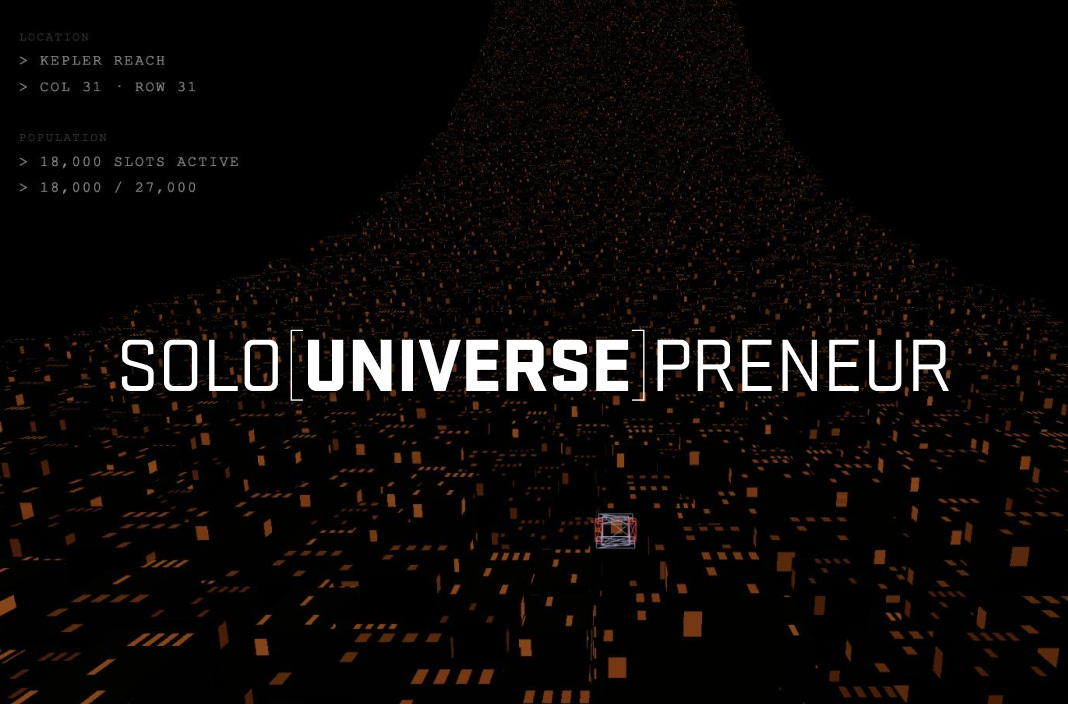
The Ilion project kept crashing.
Ilion is my attempt to visualize the Dyson ring where one of my stories is set, the map of my setting, a habitat structure 18,000 slots wide, orbiting a star, dense enough to house a city. The goal was always a flyable simulation: a drone perspective, moving through the ring at ground level, buildings rising on either side, the floor curving upward ahead and behind until you can’t tell where gravity ends and architecture begins.
Every time I tried to build it, the GPU died.
I tried starting with the ring geometry and adding the city. Crashed.
I tried building the city first and wrapping it into the ring shape. Crashed.
I tried breaking the ring into chunks and loading them as the drone moved. Better, but still not right.
I spent days on this problem before sitting down to do what I should have done at the start: ask Claude Code for an honest assessment.

It was humbling. I’d been attacking the wrong problem. The ring wasn’t crashing because my city was too dense or my chunks were too large. It was crashing because I was trying to hold the entire ring in memory as geometry, all of it, simultaneously, at once. At any meaningful scale, that’s not a performance problem you can optimize your way out of. It’s an architectural mistake.
The thing was too big, too ambitious for this moment.
The solution the assessment surfaced was this: don’t build the ring.
What you do instead is build a flat city, a completely normal grid, nothing curved about it. Then, in the vertex shader, you apply a cylindrical bend. The CPU thinks in flat coordinates. The GPU, at render time, bends the plane into a ring shape. You never store a torus. You never ask the hardware to hold 18,000 slots of curved geometry in memory. You just teach the renderer to lie about where the ground is.
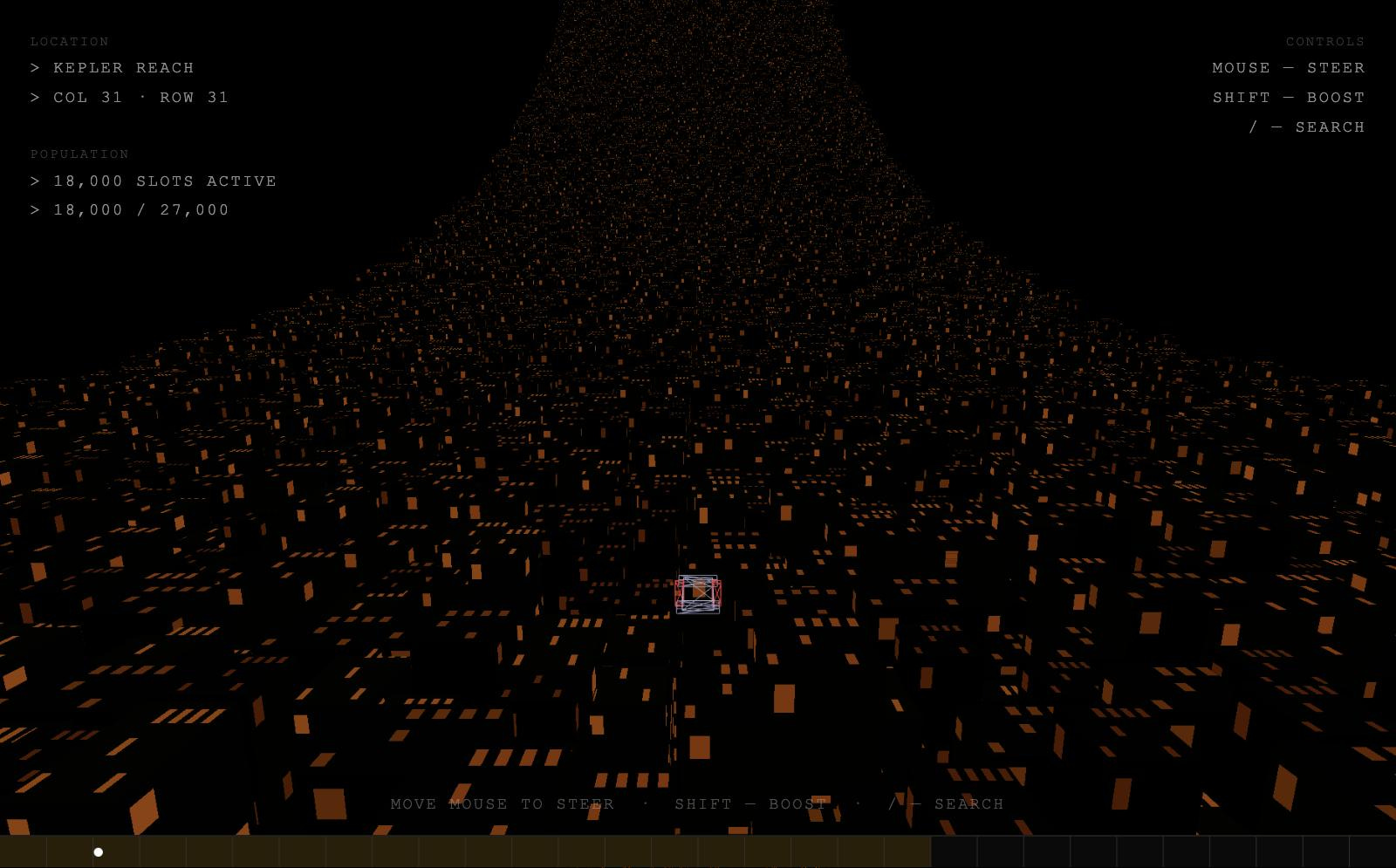
And it works. The user flies (briefly) across a surface that feels like a ring, and the ring never actually exists.
I kept staring at this when I found it. The ring doesn’t have to exist. It just has to feel like it does.
And that, I realized, is the principle everything I’m trying to build, the stories, the worlds, the Neuronomicon itself, has been circling towards.
There’s a thesis I’ve been building toward in this newsletter, the reason I do all of this, the thing I’m trying to prove, and it goes something like: AI makes it possible for one person to build worlds that weren’t possible before. Not better stories. Worlds. The fiction reinforced by the art reinforced by the video reinforced by the visualization reinforced by two centuries of generated history that I actually know.
But the Ilion crash made me articulate something I’d been assuming without examining: you don’t build a world by modeling it completely. You build the conditions for the feeling of something much larger than you could actually hold.
The vertex shader is the whole project in miniature. The Neuronomicon doesn’t exist as a complete object. Nobody could build that. It exists as a system, chapters, tools, timelines, experiments, dispatches, that produces the sensation of weight and scale and history, without any single part of it being the whole thing. When you land on the Ilion ring page and fly through the city, you’re not looking at a ring. You’re looking at math that’s learned to feel like one.
That distinction matters, because it changes what “building a universe” actually requires. It requires, first, that you stop trying to hold everything in memory at once. The scope will kill your GPU every time.
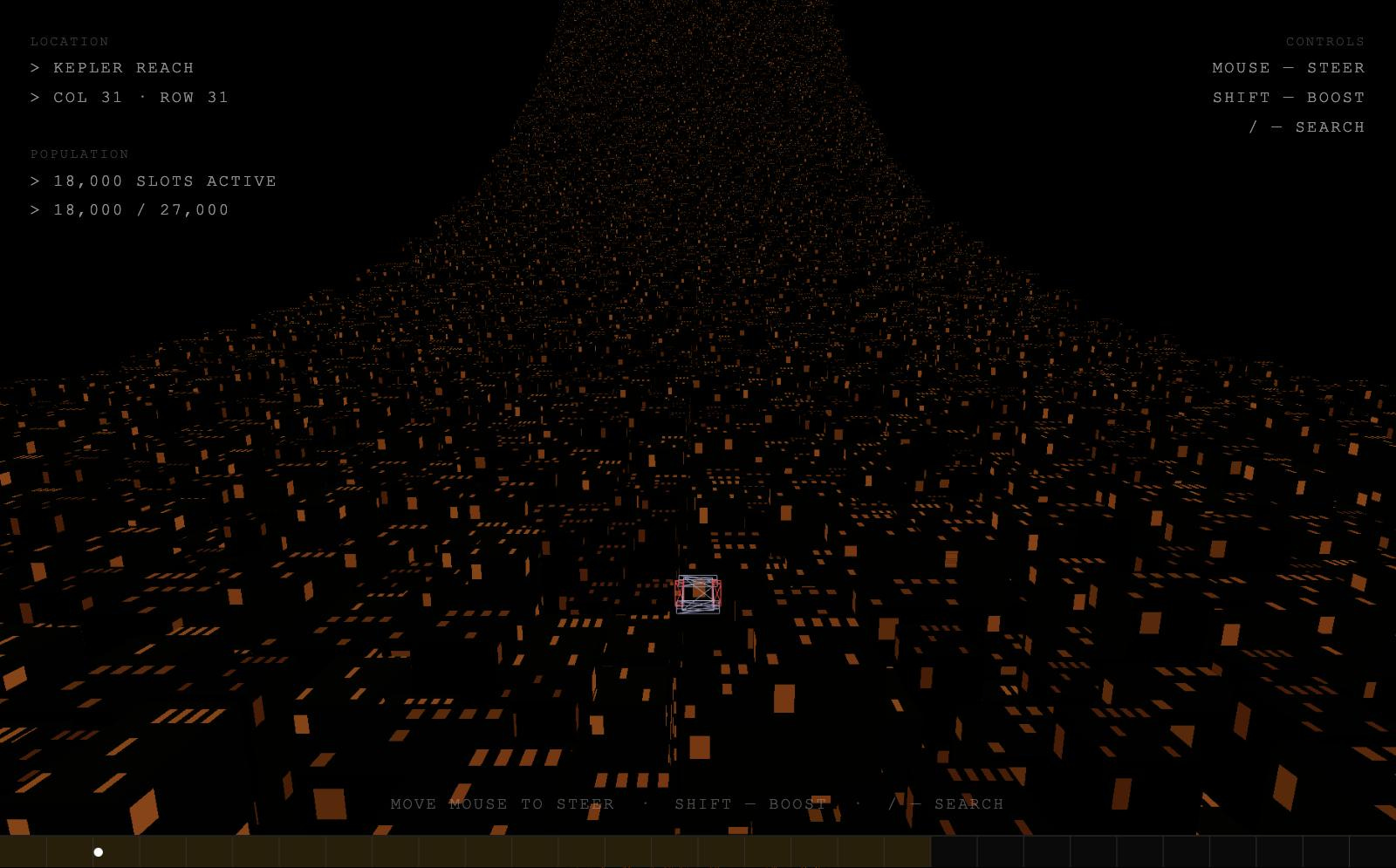
I’ll keep trying: The Ilion project got a fresh start this week: new repo, new architecture, the vertex shader bend as the foundation. The goal right now is tight on purpose, start with the basics. Just the city that feels like a ring.
The three things I want to ship right now aren't features.
The feeling of scale, the Ring is a superstructure, thousands of Earths put together, and you just can't fly end to end in a few minutes.
The sense of where you are inside it, because even at that size, there should be landmarks, regions.
The ability to find something specific in the middle of all of it, because what's the point of it being big if you can't travel somehow across it?
That’s also, I realize, a reasonable description of what this newsletter is trying to do.
Cheers.
